How Fintech Companies Are Adapting to Changing Consumer Expectations
Meeting the Growing Demand for Faster, Smarter, and More Personalized Digital Financial Experiences
The way people manage money and access digital financial services is changing rapidly. Consumers today expect more than simply being able to complete a transaction. They want experiences that are fast, secure, convenient, transparent, personalized, and rewarding.
As digital adoption continues to grow, fintech companies are responding by developing solutions that fit more naturally into everyday life. From seamless digital transactions and real-time services to stronger security and personalized experiences, the fintech industry is continuously evolving around changing customer needs.
Consumers Expect Convenience at Every Step
Convenience has become one of the most important factors influencing digital experiences. Customers want to complete everyday activities without unnecessary steps, delays, or complicated processes.
Whether it is making a payment, managing a bill, purchasing a product, or accessing a digital service, consumers increasingly prefer platforms that bring multiple services together in one place.
Fintech companies are therefore focusing on creating simple and intuitive platforms that allow users to complete tasks quickly and efficiently.
Speed Is Becoming the New Standard
In the digital world, customers are accustomed to instant access. They expect transactions and services to work smoothly without long waiting periods.
Fintech companies are investing in technology and improved digital infrastructure to deliver faster processing, real-time updates, and seamless user experiences.
The goal is no longer just to provide a digital alternative. It is to make the digital experience faster and easier than traditional methods.
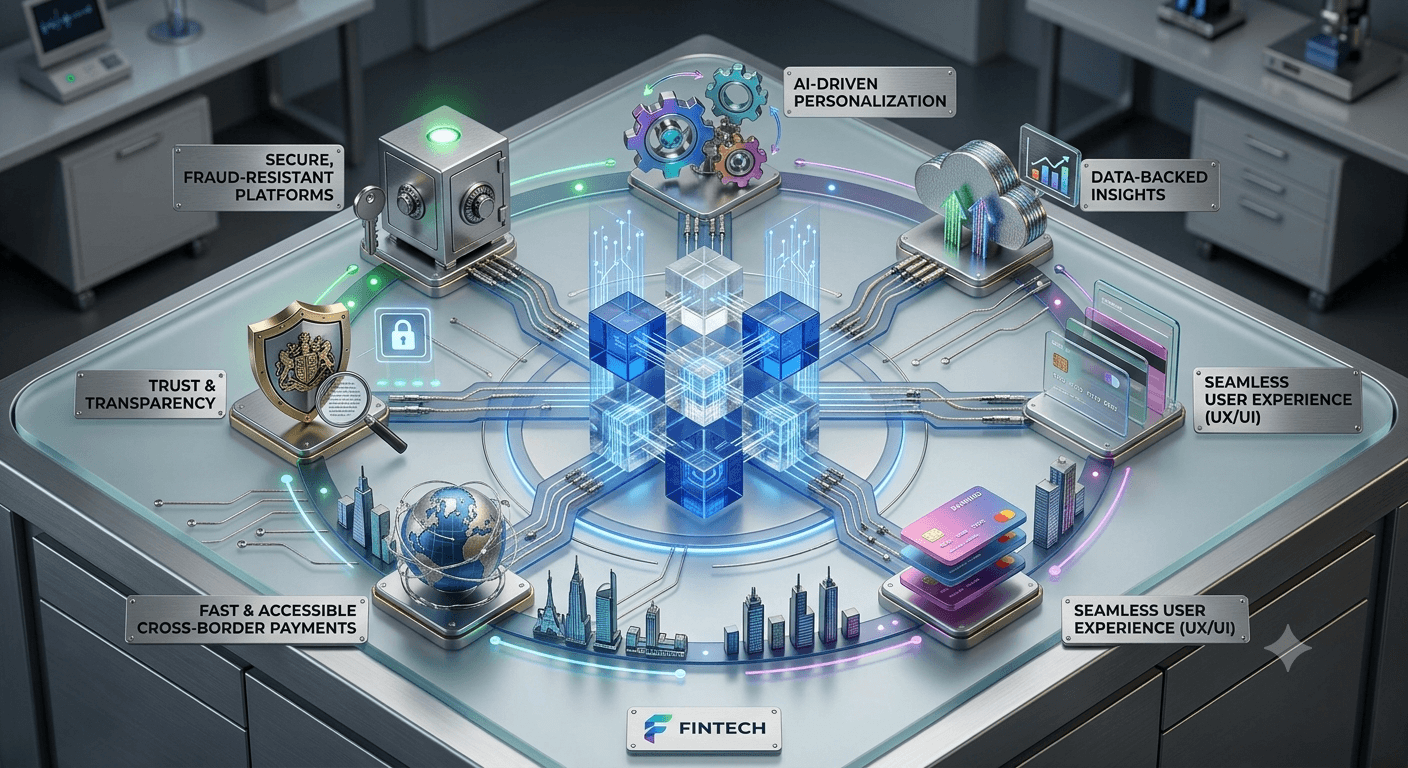
Security and Trust Matter More Than Ever
As more financial activities move online, security has become a fundamental part of the customer experience.
Consumers want to know that their personal and transaction information is protected. They also expect fintech platforms to provide reliable systems that help reduce risks associated with digital transactions.
This is encouraging fintech companies to strengthen areas such as secure payment processing, data protection, authentication, transaction monitoring, and fraud prevention.
At the same time, transparency plays an important role in building trust. Clear information about transactions, fees, policies, and services can help customers feel more confident when using digital platforms.
Personalization Is Changing Customer Experiences
Consumers increasingly expect digital platforms to understand their needs and provide experiences that are relevant to them.
Fintech companies are using technology and data-driven insights to create more personalized interactions. Instead of offering the same experience to every customer, platforms can provide relevant recommendations, offers, notifications, and services based on customer preferences and usage patterns.
Personalization can make digital platforms feel more useful while helping businesses build stronger relationships with their customers.
Rewards Are Becoming Part of the Digital Experience
Today's consumers are also looking for additional value from the platforms they use. Completing a transaction is no longer always the end of the experience.
Cashback, rewards, loyalty benefits, exclusive offers, and referral programs can encourage customers to engage more frequently with digital platforms.
This shift is creating opportunities for fintech companies to combine convenience with value, giving customers more reasons to continue using their services.
More Services in One Digital Ecosystem
Another major shift is the move toward integrated digital ecosystems.
Consumers increasingly prefer platforms where they can access multiple everyday services instead of switching between several different applications.
Fintech companies are responding by expanding beyond individual financial functions and creating broader digital experiences that can connect payments, bills, shopping, rewards, and other everyday services.
This approach can make digital interactions more convenient while creating a more connected customer journey.
Technology Is Driving Continuous Innovation
Emerging technologies are playing an important role in how fintech companies respond to changing expectations.
Artificial intelligence, automation, cloud technology, advanced analytics, and improved digital infrastructure are helping companies enhance customer support, identify patterns, improve efficiency, and develop more intelligent digital services.
As these technologies continue to evolve, fintech companies have greater opportunities to make digital experiences more responsive and customer-focused.
The Future of Fintech Is Customer-Centric
The fintech industry is moving toward a future where technology is not simply about digitizing financial activities. It is about creating experiences that are simpler, faster, safer, smarter, and more rewarding.
Consumer expectations will continue to evolve, and companies that listen to those expectations will be better positioned to build lasting relationships with their customers.
For fintech businesses, the focus is increasingly shifting from simply asking, “What service can we provide?” to asking, “How can we make the customer's everyday experience better?”
Conclusion
Changing consumer expectations are shaping the next phase of fintech innovation. Customers want convenience without complexity, speed without compromising security, personalization without sacrificing privacy, and additional value from the platforms they use.
Fintech companies that successfully combine technology, trust, convenience, personalization, and rewards can create stronger digital experiences and remain relevant in an increasingly competitive market.
The future of fintech will belong to platforms that don't just keep up with customer expectations—but continuously evolve alongside them.